Chapter 01 · 1890–1919
The making
of a reformer
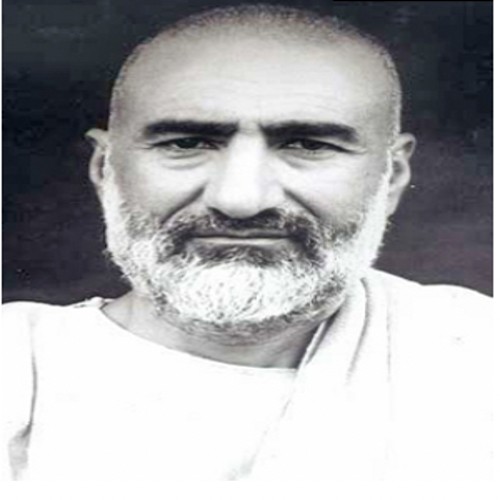
Before the movement, the uniform and the oath, there was a village in the Peshawar Valley, a mission school, and a decision that surprised everyone who knew him.
- Born
- 1890 — 6 February is the date usually given
- Birthplace
- Utmanzai, Hashtnagar, Peshawar Valley
- District today
- Charsadda, Khyber Pakhtunkhwa, Pakistan
- Province at birth
- Punjab Province, British India
- Father
- Bahram Khan, landowner
- Elder brother
- Khan Abdul Jabbar Khan (Dr Khan Sahib)
Origins
A valley, a clan
and a frontier
Utmanzai sits in Hashtnagar, the ‘eight towns’ country of the Peshawar Valley, on the alluvial plain fed by the Swat and Kabul rivers. It is farming land, densely settled and long fought over. Ghaffar Khan was born there in 1890 into the Mohammadzai clan, in a family of khans — landowners with local standing rather than great wealth.
One point of chronology is worth making precisely, because it is often blurred. When he was born, the Peshawar Valley was administered as part of Punjab Province. The North-West Frontier Province — the political unit his name is bound to — was carved out of Punjab and the trans-Indus districts only in 1901, when he was eleven. He did not grow up in the NWFP; he grew up while it was being invented, as an instrument of imperial security policy.
His father, Bahram Khan, is the figure the sources agree on. He was known for something unusual in that place and period: he stayed out of the feuds. Land disputes in Hashtnagar were routinely settled by killing, and a khan who declined to prosecute a vendetta was making a visible and slightly humiliating choice. Ghaffar Khan grew up watching a man absorb that cost. His mother is not documented by name in the accessible record, and this site does not invent one.
His elder brother, Abdul Jabbar Khan, took the other available road out of the valley: he trained in medicine, studied in Britain, and became known as Dr Khan Sahib. He would later serve as Chief Minister of the North-West Frontier Province. The two brothers spent their political lives in tandem, and the contrast between them — the physician-administrator and the barefoot organiser — runs right through the history of the Frontier.
The social world
The code he would spend his life arguing with
Pashtun social life in the Frontier was ordered by Pashtunwali — an unwritten code carrying real obligations. Three of its elements matter for understanding what Ghaffar Khan later asked of people. Melmastia, hospitality, obliged a host to shelter and feed anyone who came. Nanawatai, sanctuary, obliged him to protect even an enemy who sought refuge. And badal — retribution — obliged a man to answer an injury, and his family to answer a killing.
Badal was not lawlessness. It was law, of a kind, in a society with no state courts anyone trusted. But its arithmetic was ruinous: a single killing could commit two families to generations of reprisal, and it removed men from farming, from schooling and from any collective undertaking. Alongside it sat the jirga, the assembly of adult men that settled disputes by deliberation — a genuinely deliberative institution, and one Ghaffar Khan would later borrow wholesale to organise his movement.
Over that social order lay a colonial one. The Frontier was governed under exceptional law — most notoriously the Frontier Crimes Regulation, which allowed collective punishment of whole villages and detention without the ordinary process of the courts. The province created in 1901 had, for decades, far less constitutional standing than the rest of British India: it received the reforms granted elsewhere late, and partially. It was administered as a buffer zone.
The result was a place with two systems of authority, both of which limited what an ordinary Pashtun could do, and neither of which was interested in schools. This is the situation Ghaffar Khan's reform work addresses. His argument, made from about 1910 onwards and repeated for the rest of his life, was that the Frontier's condition could not be blamed wholly on the British — that illiteracy, vendetta and the exclusion of women were doing a great deal of the damage, and that these were things Pashtuns could change without anyone's permission.
Education
A mission school, and a commission he turned down
Formal schooling in the Frontier was scarce, and much of what existed was run by Christian missions. Ghaffar Khan was sent to the Edwardes Mission High School in Peshawar. He was, by every account, a capable student, and the school pushed him towards the conventional destination for a promising young man of his class.
That destination was the army. In his final school year he was offered a commission in the Corps of Guides — an elite regiment, and about the most prestigious opening available to a Pashtun of good family under the Raj. He refused it. The reason recorded in his own later account, and repeated across the biographical literature, is that he had seen how Indian officers were treated by their British counterparts, and concluded that the uniform would make him a subordinate in his own country rather than a leader in it.
What followed is where the sources become less uniform, and it is worth saying so. He intended to follow his brother to study in Britain; his mother, having already lost one son to England, would not agree, and the plan was abandoned. Several accounts, including the standard reference works, also record a period of study at Aligarh. Others treat his formal education as effectively ending with the mission school. This site notes the disagreement rather than resolving it.
What is not in dispute is the conclusion he drew. Having declined the one prestigious career the system offered him, and having been unable to take the other, he decided at twenty that the useful thing to do was to teach.
Education
Independent schools, teaching in Pashto rather than English or Urdu, run by the community and not by the mission or the state. Literacy first, because nothing else could be built without it.
Social reform
Literacy made argument possible: against the blood feud, against the exclusion of women from learning, against a khan class that profited from both. Reform was what education was for.
Community empowerment
Villages that could read, deliberate and organise did not need a patron. That capacity — not a slogan — is what eventually became a movement of a hundred thousand people.
This sequence is an interpretation of the direction of his work, drawn from the chronology of what he founded and when. It is not a programme he published in these terms.
Early reform
1910–1919
In 1910 he opened a school at Utmanzai. In 1911 he attached himself to the movement of Haji Sahib of Turangzai, an older Frontier reformer and anti-colonial figure whose network of independent schools the colonial administration regarded as seditious. By 1915 the authorities had closed Ghaffar Khan's school and placed him under restriction.
Closure did not stop the work; it changed its form. Between roughly 1915 and 1918 he travelled on foot through the settled districts of the Frontier — several hundred villages — speaking about schooling, feud and reform. It was in this period, and from ordinary villagers rather than from any organisation, that he acquired the names that stuck: Badshah Khan, king of chiefs, and Bacha Khan.
In 1919, during the agitation against the Rowlatt Act, he was arrested for the first time. Prison would become one of the ordinary conditions of his life.
Born at Utmanzai
In Hashtnagar, Peshawar Valley — then part of Punjab Province, British India.
The Frontier becomes a province
The North-West Frontier Province is created out of Punjab and the trans-Indus districts.
Edwardes Mission High School
Schooling in Peshawar at a mission institution — one of the few functioning schools open to him.
Declines the Corps of Guides
Refuses an army commission after concluding that Indian officers were treated as subordinates in their own country.
Opens a school at Utmanzai
At the age of twenty. The first of the independent schools that would define his reform work.
Joins Haji Sahib of Turangzai
Works within the older reformer's network of independent Frontier schools.
Marries Meharqanda
Daughter of Yar Mohammad Khan. She would die in the influenza pandemic of 1918.
The school is closed
Colonial authorities shut the Utmanzai school and place him under restriction.
Walking the settled districts
Several hundred villages on foot. The names Badshah Khan and Bacha Khan date from this period.
First imprisonment
Arrested during the agitation against the Rowlatt Act.