Chapter 06 · 1948–1988 and after
The long life of an idea
He lived forty-one years after Partition. Most of the first twenty-five were spent in prison, under house arrest, or in exile. He was ninety-seven when he died, and both his funeral and his highest honour crossed the border that had been drawn through his life.
After 1947
A citizen
of a state that
imprisoned him
The pattern of his later life is the same as the pattern of his early life, with the flag changed. He argued for provincial autonomy, for Pashto, for education and against centralised authority; he was detained; he was released; he argued again.
He never took office and never took up arms. He also never accepted the terms offered him: after his brother Dr Khan Sahib was assassinated in 1958, the government offered him a ministry. He refused it.
Taken across his whole life — British India and then Pakistan — roughly a third of his ninety-seven years was spent in prison, under detention or in exile.
Detention without charge
Held for six years. The Khudai Khidmatgar is banned in September 1948, a month after the events at Babrra.
Released; speaks in the Assembly
Condemns the killing of his supporters at Babrra in a speech to the National Assembly.
Arrested over One Unit
Imprisoned for opposing the scheme merging the provinces of West Pakistan into a single unit — for him, the erasure of the Frontier as a political entity.
Refuses a ministry
Offered a place in government after the assassination of his brother, Dr Khan Sahib. He declines.
Years in prison
Released in 1964 on grounds of ill health, and permitted to travel to the United Kingdom for treatment.
Exile in Afghanistan
Eight years outside Pakistan. He returns in December 1972, after a National Awami Party provincial government is formed.
To India for the Gandhi centenary
Travels to India for the centenary of Mahatma Gandhi's birth — his first extended return since Partition.
Arrested again
Detained at Multan under the government of Zulfiqar Ali Bhutto. He is in his eighties.
The Congress centenary
Attends the centenary session of the Indian National Congress in Bombay, at ninety-five.
Death at Peshawar
He dies at ninety-seven, following complications of a stroke.
January 1988
A funeral that
crossed two borders
and stopped a war
He had asked to be buried at Jalalabad, in Afghanistan — not in the Pakistan he had lived in for forty years, and not in the India he had helped to free. The choice was deliberate, and it was the last political statement he made.
The Soviet–Afghan war was at its height. To allow the cortege to travel from Peshawar across the border to Jalalabad, the combatants declared a ceasefire. Very large crowds followed the procession; the Afghan government accorded military honours, and President Najibullah attended. Two explosions during the funeral killed a number of mourners — a fact the record includes and this site does not omit.
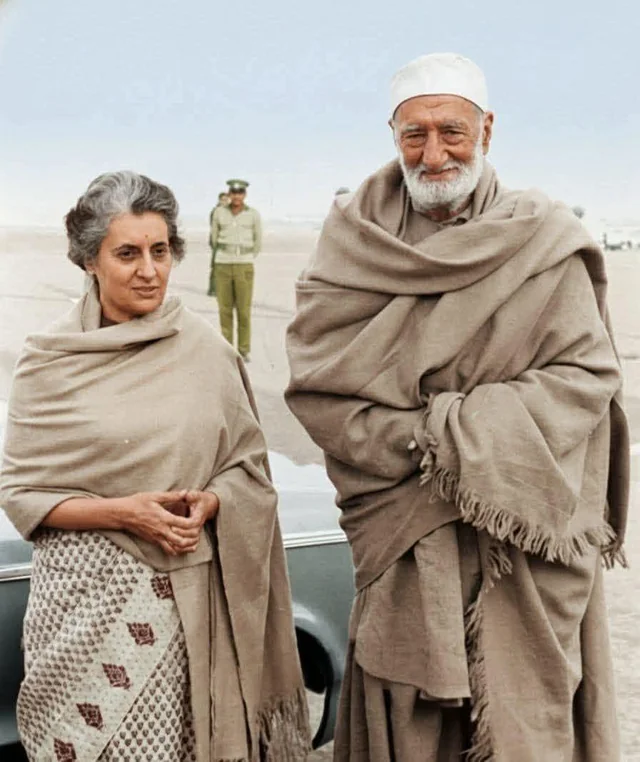
India's Prime Minister, Rajiv Gandhi, travelled to attend, over security objections from the Pakistani government of Zia-ul-Haq. India declared five days of national mourning for a man who had never been an Indian citizen.
It is difficult to think of a comparable set of facts for any other figure of the period: three states and two sides of an active war suspending their business, briefly, for the burial of a man who had held no office in any of them.
Recognition
Awards and honours
Only honours that can be verified in the published record appear below. Nothing has been added for symmetry.
Amnesty International — Prisoner of Conscience
Named by Amnesty International, which described his case as symbolising the suffering of very large numbers of prisoners of conscience around the world.
Jawaharlal Nehru Award for International Understanding
India's award for contributions to international understanding, conferred while he was still living under restriction in Pakistan.
Nominated for the Nobel Peace Prize
Nominated, in his mid-nineties. He did not receive the prize.
Bharat Ratna
India's highest civilian honour. He was the first person who was not an Indian citizen to receive it — an award made by one country to a citizen of another, for work largely done before either existed in its present form.
His own account
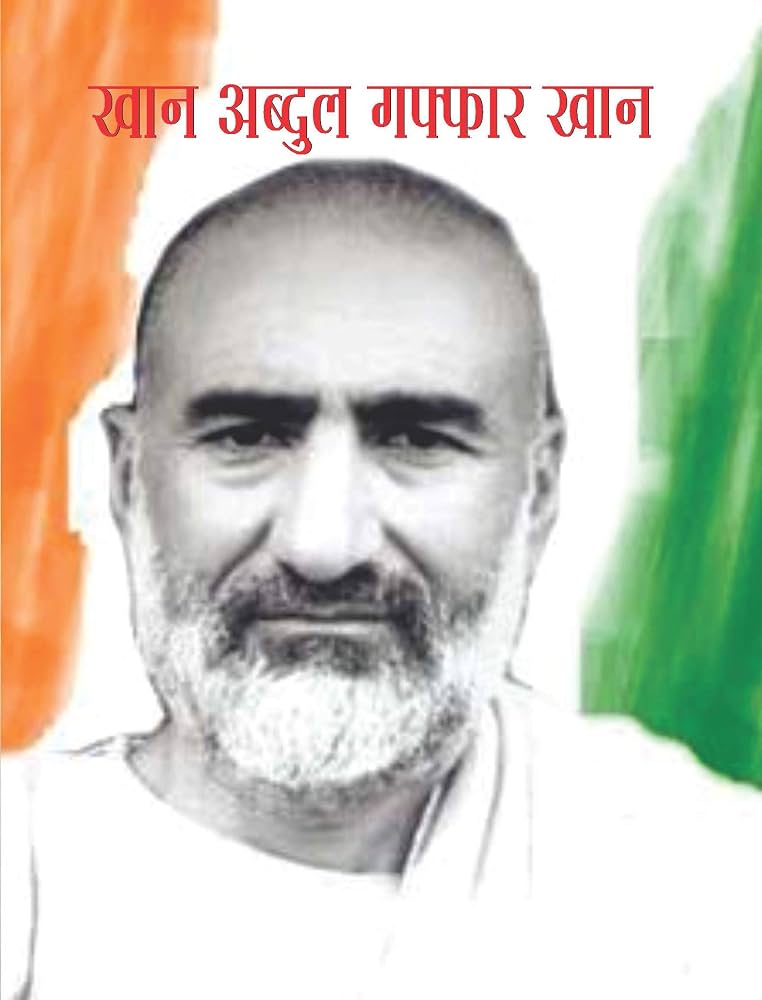
My Life and Struggle
His autobiography, narrated rather than written and published in English translation in 1969 (Pashto: Zma Jwand au Jad-o-Jehad). It remains the primary first-person source for his early years, and for how he understood his own reform work.
Memorials
Where his name is carried
His name is attached to institutions and places on both sides of the border he refused to accept as final.
In Pakistan: Bacha Khan International Airport at Peshawar, and Bacha Khan University at Charsadda — in the district where the first Azad school opened in 1910, which is a fitting choice for a man who thought a school was the most political object in a village.
In India: Khan Abdul Ghaffar Khan Marg, the seafront road at Worli in Mumbai, and a commemorative postage stamp issued in 1993. His name and that of his family are also carried by well-known places in Delhi and Karachi.
Why there are no photographs in this section. The supplied image collection contains no photographs of statues, memorials, institutions or gravesites. Rather than illustrate memorials with unrelated pictures, or invent locations to fill the space, this section is presented as text. Supply photographs of the airport, the university, the Worli road sign or the Jalalabad grave and they will be added here.
Also in the record
He appears as a character in Richard Attenborough's Gandhi (1982), and is the subject of the documentary The Frontier Gandhi (2008). The standard English-language biography is Eknath Easwaran's Nonviolent Soldier of Islam: Badshah Khan, a Man to Match His Mountains.
Modern relevance
What can we learn
from his life?
Not a set of lessons to agree with, but a set of things his life demonstrates — including the parts that did not work.
Peaceful resistance can scale
A hundred thousand people held a nonviolent discipline for eighteen years under a state that answered them with force. Whatever else is arguable, that is a matter of record, and it settles the question of whether such a thing is possible at scale.
Institutions outlast campaigns
He built schools, a society, a journal and a corps — things with committees, funds and successors. When he was imprisoned, which was often, the work continued. Movements built on a single leader's presence do not survive that leader's arrest.
Reform from inside a tradition
He argued for the education of women and against the blood feud from within Pashtun and Islamic terms, not against them. That is why the argument travelled in a society that would have rejected the same case made from outside.
Courage is not the same as force
His central claim was that absorbing an attack without retaliating takes more from a person than striking back does. He made that claim to a society that prized physical courage, and a great many people accepted it.
Pluralism is a practical position
A Muslim leader of a Muslim-majority province who opposed partition on religious lines, worked closely with Hindu colleagues, and was honoured after his death by India, Pakistan and Afghanistan alike. His life is an argument against the inevitability of the divisions of 1947.
And the limits
His movement was undone by a settlement negotiated elsewhere and above it. Nonviolent discipline, however deep, did not give the Khudai Khidmatgar a seat at the table in June 1947. That failure is part of the evidence too, and a serious reading has to include it.
How this site treats the record
Bacha Khan is claimed by a number of causes, and it is easy to find versions of him tailored to each. This archive tries to do something narrower: to say what is documented, name where the documentation comes from, and mark clearly where scholarship disagrees or where the evidence runs out.
So: the founding month of the Khudai Khidmatgar is given as disputed; the casualty figures at Qissa Khwani are given as contested; the individuals in an unidentified group photograph are not named; the 1947 referendum result is given both as a share of votes cast and as a share of the electorate, because both figures were used politically and both are true.
That is a less stirring way to tell the story. It is also the only way to tell it that he would have any use for.